Blood Sugar Basics: Simple Daily Habits That Support Steady Days

Blood sugar, or blood glucose, is the energy your body draws from the food you eat. When it rises and falls gently across the day, most people feel steadier energy, fewer mid-afternoon slumps, and fewer late-night snack cravings. The good news: everyday habits — not extreme diets — make most of the difference for generally healthy adults.
1. Build plates around fiber
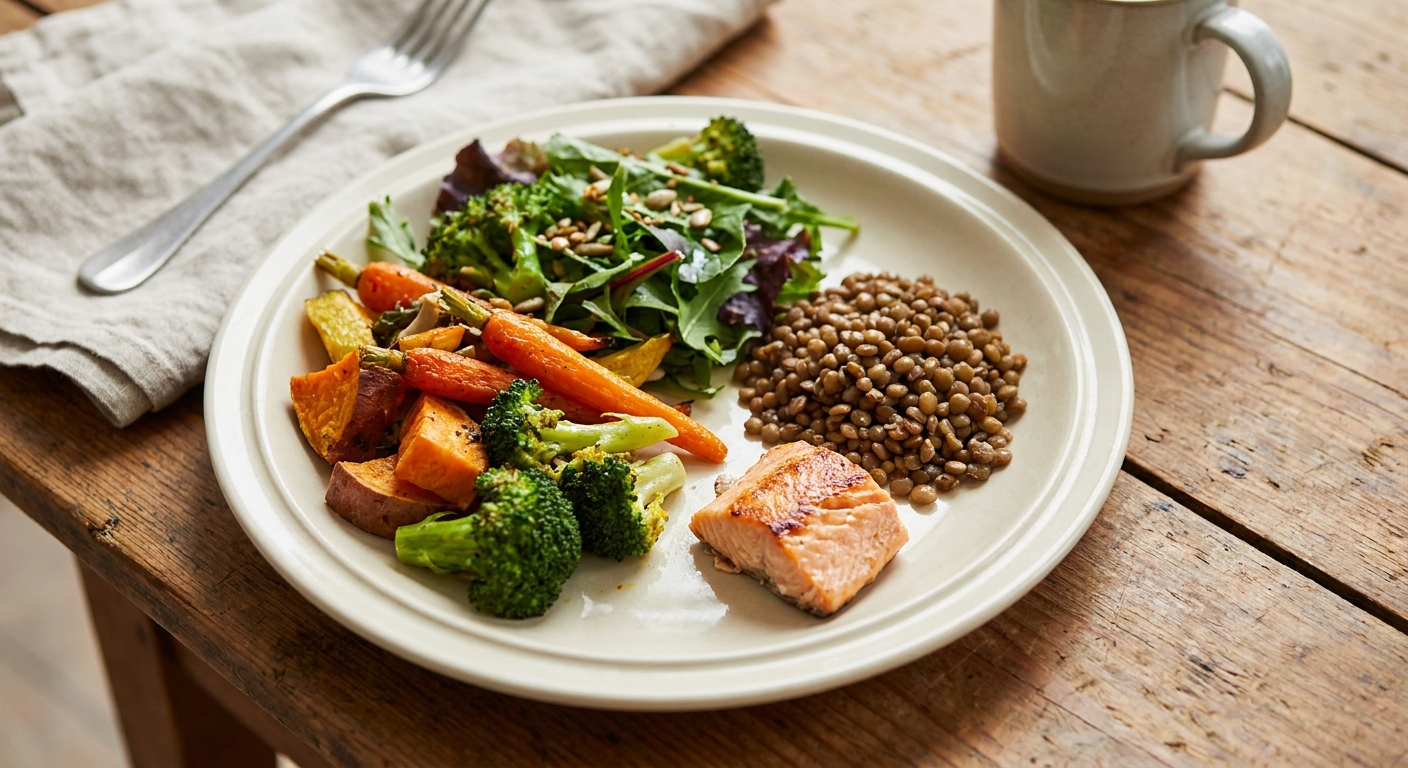
Fiber slows how quickly glucose enters your bloodstream. Vegetables, beans, lentils, oats, and whole grains are the simplest tools in the kitchen.
- Aim to fill roughly half your plate with non-starchy vegetables at lunch and dinner.
- Swap white bread or white rice for whole-grain or legume-based versions when it's convenient.
- Keep the skin on potatoes and fruit — that's where much of the fiber lives.
2. Walk after meals
A short walk 10–15 minutes after eating helps your muscles use circulating glucose. You don't need a gym routine — a loop around the block counts. Many people find a post-dinner walk also improves digestion and sleep. We covered the research behind this one in detail in our post-meal walking note.
3. Protect your sleep
Poor sleep is an underrated factor in how your body handles glucose the next day. Most adults do best with 7–9 hours, at consistent times.
- Keep a regular wind-down time, even on weekends.
- Dim screens in the last hour before bed, or move them out of the bedroom entirely.
- Caffeine earlier in the day; herbal tea later.
4. Don't skip meals to "save up"
Long gaps often lead to intense hunger, then larger portions eaten quickly — a pattern that swings glucose harder than steady, moderate meals. If you snack, reach for options with some protein or fat: nuts, yogurt, cheese with fruit.

5. Stay hydrated
Water is what your body expects. Sugary drinks deliver glucose fast, with none of the fiber that whole fruit provides. Keeping a bottle nearby makes the better choice the easier one.
The honest summary
Small habits, repeated most days, tend to matter more than perfect weeks. Pick one change from this list, try it for two weeks, and notice how you feel. And if you have a diagnosed condition or take glucose-lowering medication, bring the conversation to your doctor first — habits are a complement to care, never a replacement.